Showing posts with label movies. Show all posts

Tuesday, October 2, 2012

Oddments


So maybe this should happen over Christmas break? I really liked the book when I read it in high school, and I'm really, really curious to see what Tom Stoppard (Rosencrantz and Guildenstern are Dead) and Joe Wright (the 2005 Pride & Prejudice) do to it. Auntie Seraphic seems to approve.

And, on an utterly unconnected note, St. Hildegard of Bingen is going to be declared a Doctor of the Church on Sunday. Cool stuff.

Thursday, March 24, 2011

To Sleep, Perchance to Dream

Dreams feel real while we're in them. It's only when we wake up that we realize something was actually strange.


Throughout human history, dreaming has fascinated and mystified humans. One of my friends tells a story of when her older brother was 5. He came down from his bed one night and told his parents: "Mommy! I saw pictures on my eyelids when I slept!" How fascinating and sweet that a small little boy had to be told that the pictures on his eyelids were a different kind of reality.

In a sense, dreaming mirrors the reality of life. When we dream, we enter a different sort of reality that's a part of our larger reality. When we wake from dreaming, we come back to the waking world, the "real world." But, just as dreams end, this life will pass by, when we die will we wake into the reality that we're actually meant for. The illogic of dreams we find jarring when we are aware that there is a greater world we are meant for. When we realize that there is a greater, deeper, more real reality that we are born for, then this world will seem like a passing dream.

Rose, the sanguine young heroine of Shadow of the Bear, ponders, "Have you ever felt that there was something going on in life that not everyone was aware of?...As though there’s a story going on that everyone is a part of, but not everybody knows about—a sort of drama, a battle between what’s peripheral and what’s really important. As though the people you meet aren’t just their plain, prosaic selves, but are actually princes and princesses, gods and goddesses, fairies, gypsies, shepherds, all sorts of fantastic creatures who’ve chosen to hide their real shape...Or have forgotten who they really are." The possibility that there is a deeper reality to our world is exciting and exhilarating. When we shuffle off this mortal coil, we will enter something so real, this world of ours now will seem like a passing shadow.
Now we dream, soon we will awake. That's the hope.

Sunday, August 8, 2010

In Which I Pontificate Upon Two Disparate Topics

Firstly, a slight reflection on the word memoir:

Memoir is a much more enticing word than biography. A memoir is memories, personal impressions, what a person sees as important about one, particular episode or period of life. A biography must grapple with facts, reciting the events of one person's life from birth to death, inclusive. Plus, memoir is taken from a French word; biography from the Greek. Which language strikes you as more elegant and intriguing?

Secondly, a brief rant about Ironman 2:

During the climactic encounter with the Bad Guys, Scarlett Johansson's character strips down to her undergarments and dons a skintight...something. Honestly, I couldn't tell what it was supposed to be. Sure, it might be a little inconvenient to fight the villain's minions in the secretary's de rigueur pencil skirt, but really? Is it that much more realistic that she would take five minutes to change into a shrink-wrap bodysuit before taking out the security guards? Blurgh (that is a disgusted noise, FYI). Would they make a male sidekick change from suit to speedo? Hazarding a guess here, I'd say no.

Wednesday, March 31, 2010

Morality & Cocktails?


A Thoughtful Thinking-Through of the Thoroughly Enjoyable "Miss Pettigrew Lives for a Day"
by Portia & Desdemona


Miss Pettigrew Lives for a Day follows the trials and triumphs of Miss Guinevere Pettigrew on her day spent as a companion to Delicia LaFosse, a struggling actress. Miss Pettigrew is a prim middle-aged woman, the daughter of a clergyman, who is the quintessential strait-laced turn-of-the-century woman. Delicia, on the other hand, is living the life of a young starlet trying to make her way to stage stardom-using any and every means available. In contrast to Miss Pettigrew, Delicia's morals reside decidedly in the "non-existent" category. Although Delicia's silly little runnings about are portrayed with tongue-in-cheek and a little wink, they are, to be candid, decidedly immoral. She's giving herself away in order to get ahead in the world. And the justifications she uses are basically "well, everybody's doing it." Miss Pettigrew doesn't approve at all, she remonstrates Delicia, telling her: "Love is not a game."

The many faces of Delicia.

The fact is, Delicia herself knows that what she's doing is wrong. She simply doesn't have the moral muscle to change herself. As Mitch Albom writes in Tuesdays With Morrie, "The culture we have does not make people feel good about themselves. And you have to be strong enough to say if the culture doesn't work, don't buy it." (42) - Morrie Delicia on her own does not have that strength. But, with the helpful influence of Miss Pettigrew, she finds the moral backbone she lacks.

And, on the flipside, Miss Pettigrew needs Delicia. Miss Pettigrew is told to "loosen up" on several occasions. Miss Pettigrew is a strong, moral woman. But a woman who has confused moral strength with severity. Delicia has confused freedom and joy with doing whatever the heck she wants. Miss Pettigrew is lacking love and warmth; Delicia is lacking love and strength. But, by the end of the day, Miss Pettigrew and Delicia has forged a friendship which has allowed these women to share their love, warmth, and strength.

"So many people walk around with a meaningless life. They seem half-asleep, even when they're busy doing things they think are important. This is because they're chasing the wrong things." (43) --Morrie (Tuesdays With Morrie)

Friday, February 5, 2010

Pan's Labyrinth

by Desi & Portia


"What happens when make-believe believes it's real?"


"You're getting older, and you'll see that life isn't like your fairy tales. The world is a cruel place. And you'll learn that, even if it hurts... Ofelia! Magic does not exist. Not for you, me or anyone else."

Or does it?

That is the question posed by Pan's Labyrinth. The film, by Guillermo del Toro, is a mystifying, captivating and beautiful work of art.

The narrator tells us at the beginning of the film:

A long time ago, in the underground realm, where there are no lies or pain, there lived a Princess who dreamed of the human world. She dreamed of blue skies, soft breeze, and sunshine. One day, eluding her keepers, the Princess escaped. Once outside, the brightness blinded her and erased every trace of the past from her memory. She forgot who she was and where she came from. Her body suffered cold, sickness, and pain. Eventually, she died. However, her father, the King, always knew that the Princess' soul would return, perhaps in another body, in another place, at another time. And he would wait for her, until he drew his last breath, until the world stopped turning...

We then meet Ofelia. The poor young girl's being dragged along with her pregnant mother to live with her stepfather, a captain in the Facist army. Ofelia does not actively hate her stepfather, she does not act maliciously towards him, but she refuses to call him papa. Her mother pleads with her, "It's just a word, Ofelia, just a word." but Ofelia knows it is not. There is a man who is her father, and she is his beloved princess. This man is not him. In her innocent youth, Ofelia refuses to tell such a blatant lie.

When Ofelia and her mother reach their new home, an outpost in the wooded mountains, Ofelia immediately discovers a labyrinth in the woods. And from there on out, Ofelia is swept up into other worldly adventures. And we ask ourselves: are they real or imaginary?


Is Ofelia a princess?

Are her adventures real or our they a product of her own imagination?

The movie is brilliant, yet brutal. While it is definitely a fantasy, no one could accuse it of being an escapist fantasy. The parallell worlds of the spiritual/mythological world that Ofelia ventures into, and the harshly real world of the Spanish rebellion are both cut-throat, dangerous places. Ofelia is the only person that we know is good. She is a protagonist that we cling to, because there's no one else to cling to.

For young children (and yes, even adults on occasion), imaginary worlds and make-believe are a definite escape from their problems-they're a release. If the faun is a product of Ofelia's imagination, he is a far from comforting one. While he appears to be a father-figure, a guardian to this princess lost in a cruel, foreign world, there's always a doubt in our hearts: Do we trust him? What makes Ofelia an extraordianry heroine is her innocence and her trust. She never doubts that what the faun tells her to do is for her own good. She trusts. I don't know if you can read it, but the poster above has a tagline at the bottom, which reads: "Innocence Has A Power Evil Cannot Imagine" Ofelia's innocence is her only weapon to combat the evil and cruelty around her.

"I've had so many names. Old names that only the wind and the trees can pronounce. I am the mountain, the forest and the earth. I am... I am a faun."

An interesting component in the film is the labyrinth. While "labyrinth" and "maze" are often used as synonyms, they mean and imply vastly different ideas. A maze is a human puzzle, as it were. You try to get from one end of the maze to the other-you are presented with choices: you can either choose to go to your left or to your right. One of these choices will lead you further on the right path, the other will lead you to a dead end.

But in a labyrinth, you only have one path. It leads you to the center, and then out again. You have no idea where you are going; you simply have to trust that you will make it to the middle, through the middle and then out again. That trust is a huge component of the film. Ofelia trusts the faun, she believes that she will get through this dark time in her life, and reach the kingdom she is destined for.

But can we really trust anyone?

And yet, what happens to us when we trust no one. We turn into a Captain Vidal. If we close ourself off from humanity, distrusting all our fellow men, we cease to become human. Ofelia battles bizzare and frightening monsters in her imaginary land. But the real monster is the man she refuses to call father; and she defeats him, though it costs her a terrible price.

Whether the labyrinth, the faun, and the magical world that Ofelia finds is real or not, it doesn't matter. Ofelia wins. She has the power of an innocent, which is unfathomable to those twisted and soured by their own hardened hearts. The blood she spills has the power to open the portal-she joins her mother and father, and spends an eternity by their sides. What more has she ever wanted?

"In darkness, there can be light. In misery, there can be beauty. In death, there can be life...."
G.K. Chesterton writes that "there are some who cannot see a simple truth without calling it a paradox." Paradoxes are beautiful, because they are the Truth. How can God be both God and Man? Yet He is. How can there be Life in Death? How can some something be both Real and yet Not-Real?
Yet they are. Paradoxes are the fabric of our universe-and they are beautiful. The Truth is inscrutably and piercingly simple, and yet it is a beautiful, unfathomable mystery.


Tuesday, January 26, 2010

Emma

"Silly things do cease to be silly if they are done by sensible people in an impudent way."---Emma Woodhouse

Emma is airing on PBS. It's utterly magnificent. Here is a most thouroughly diverting quiz to pique your interest. :)

"Then let us walk about and quiz people. Come along with me, and I will show you the four greatest quizzers in the room; my two younger sisters and their partners. I have been laughing at them this half hour." Northanger Abbey, Chpt. VIII
'That is the case with us all, papa. One half of the world cannot understand the pleasures of the other.'" --Emma, Chapter IX

Tuesday, December 1, 2009

Movie Review

I found this review of the Passion of the Christ. It's almost 6 years old, but I aboslutely loved it. I just thought I'd post it-it's got some really great reflections on the film.

The Passion of the Christ


BY ROGER EBERT / February 24, 2004

If ever there was a film with the correct title, that film is Mel Gibson's "The Passion of the Christ." Although the word passion has become mixed up with romance, its Latin origins refer to suffering and pain; later Christian theology broadened that to include Christ's love for mankind, which made him willing to suffer and die for us.

The movie is 126 minutes long, and I would guess that at least 100 of those minutes, maybe more, are concerned specifically and graphically with the details of the torture and death of Jesus. This is the most violent film I have ever seen.

I prefer to evaluate a film on the basis of what it intends to do, not on what I think it should have done. It is clear that Mel Gibson wanted to make graphic and inescapable the price that Jesus paid (as Christians believe) when he died for our sins. Anyone raised as a Catholic will be familiar with the stops along the way; the screenplay is inspired not so much by the Gospels as by the 14 Stations of the Cross. As an altar boy, serving during the Stations on Friday nights in Lent, I was encouraged to meditate on Christ's suffering, and I remember the chants as the priest led the way from one station to another:

At the Cross, her station keeping ...

Stood the mournful Mother weeping ...

Close to Jesus to the last.

For we altar boys, this was not necessarily a deep spiritual experience. Christ suffered, Christ died, Christ rose again, we were redeemed, and let's hope we can get home in time to watch the Illinois basketball game on TV. What Gibson has provided for me, for the first time in my life, is a visceral idea of what the Passion consisted of. That his film is superficial in terms of the surrounding message -- that we get only a few passing references to the teachings of Jesus -- is, I suppose, not the point. This is not a sermon or a homily, but a visualization of the central event in the Christian religion. Take it or leave it.

David Ansen, a critic I respect, finds in Newsweek that Gibson has gone too far. "The relentless gore is self-defeating," he writes. "Instead of being moved by Christ's suffering or awed by his sacrifice, I felt abused by a filmmaker intent on punishing an audience, for who knows what sins."

This is a completely valid response to the film, and I quote Ansen because I suspect he speaks for many audience members, who will enter the theater in a devout or spiritual mood and emerge deeply disturbed. You must be prepared for whippings, flayings, beatings, the crunch of bones, the agony of screams, the cruelty of the sadistic centurions, the rivulets of blood that crisscross every inch of Jesus' body. Some will leave before the end.

This is not a Passion like any other ever filmed. Perhaps that is the best reason for it. I grew up on those pious Hollywood biblical epics of the 1950s, which looked like holy cards brought to life. I remember my grin when Time magazine noted that Jeffrey Hunter, starring as Christ in "King of Kings" (1961), had shaved his armpits. (Not Hunter's fault; the film's Crucifixion scene had to be re-shot because preview audiences objected to Jesus' hairy chest.)

If it does nothing else, Gibson's film will break the tradition of turning Jesus and his disciples into neat, clean, well-barbered middle-class businessmen. They were poor men in a poor land. I debated Martin Scorsese's "The Last Temptation of Christ" with commentator Michael Medved before an audience from a Christian college, and was told by an audience member that the characters were filthy and needed haircuts.

The Middle East in biblical times was a Jewish community occupied against its will by the Roman Empire, and the message of Jesus was equally threatening to both sides: to the Romans, because he was a revolutionary, and to the establishment of Jewish priests, because he preached a new covenant and threatened the status quo.

In the movie's scenes showing Jesus being condemned to death, the two main players are Pontius Pilate, the Roman governor, and Caiaphas, the Jewish high priest. Both men want to keep the lid on, and while neither is especially eager to see Jesus crucified, they live in a harsh time when such a man is dangerous.

Pilate is seen going through his well-known doubts before finally washing his hands of the matter and turning Jesus over to the priests, but Caiaphas, who also had doubts, is not seen as sympathetically. The critic Steven D. Greydanus, in a useful analysis of the film, writes: "The film omits the canonical line from John's gospel in which Caiaphas argues that it is better for one man to die for the people [so] that the nation be saved.

"Had Gibson retained this line, perhaps giving Caiaphas a measure of the inner conflict he gave to Pilate, it could have underscored the similarities between Caiaphas and Pilate and helped defuse the issue of anti-Semitism."

This scene and others might justifiably be cited by anyone concerned that the movie contains anti-Semitism. My own feeling is that Gibson's film is not anti-Semitic, but reflects a range of behavior on the part of its Jewish characters, on balance favorably. The Jews who seem to desire Jesus' death are in the priesthood, and have political as well as theological reasons for acting; like today's Catholic bishops who were slow to condemn abusive priests, Protestant TV preachers who confuse religion with politics, or Muslim clerics who are silent on terrorism, they have an investment in their positions and authority. The other Jews seen in the film are viewed positively; Simon helps Jesus to carry the cross, Veronica brings a cloth to wipe his face, Jews in the crowd cry out against his torture.

A reasonable person, I believe, will reflect that in this story set in a Jewish land, there are many characters with many motives, some good, some not, each one representing himself, none representing his religion. The story involves a Jew who tried no less than to replace the established religion and set himself up as the Messiah. He was understandably greeted with a jaundiced eye by the Jewish establishment while at the same time finding his support, his disciples and the founders of his church entirely among his fellow Jews. The libel that the Jews "killed Christ" involves a willful misreading of testament and teaching: Jesus was made man and came to Earth in order to suffer and die in reparation for our sins. No race, no man, no priest, no governor, no executioner killed Jesus; he died by God's will to fulfill his purpose, and with our sins we all killed him. That some Christian churches have historically been guilty of the sin of anti-Semitism is undeniable, but in committing it they violated their own beliefs.

This discussion will seem beside the point for readers who want to know about the movie, not the theology. But "The Passion of the Christ," more than any other film I can recall, depends upon theological considerations. Gibson has not made a movie that anyone would call "commercial," and if it grosses millions, that will not be because anyone was entertained. It is a personal message movie of the most radical kind, attempting to re-create events of personal urgency to Gibson. The filmmaker has put his artistry and fortune at the service of his conviction and belief, and that doesn't happen often.

Is the film "good" or "great?" I imagine each person's reaction (visceral, theological, artistic) will differ. I was moved by the depth of feeling, by the skill of the actors and technicians, by their desire to see this project through no matter what. To discuss individual performances, such as James Caviezel's heroic depiction of the ordeal, is almost beside the point. This isn't a movie about performances, although it has powerful ones, or about technique, although it is awesome, or about cinematography (although Caleb Deschanel paints with an artist's eye), or music (although John Debney supports the content without distracting from it).

It is a film about an idea. An idea that it is necessary to fully comprehend the Passion if Christianity is to make any sense. Gibson has communicated his idea with a singleminded urgency. Many will disagree. Some will agree, but be horrified by the graphic treatment. I myself am no longer religious in the sense that a long-ago altar boy thought he should be, but I can respond to the power of belief whether I agree or not, and when I find it in a film, I must respect it.


Note: I said the film is the most violent I have ever seen. It will probably be the most violent you have ever seen. This is not a criticism but an observation; the film is unsuitable for younger viewers, but works powerfully for those who can endure it. The MPAA's R rating is definitive proof that the organization either will never give the NC-17 rating for violence alone, or was intimidated by the subject matter. If it had been anyone other than Jesus up on that cross, I have a feeling that NC-17 would have been automatic.

Friday, November 13, 2009

PHF=100

Please pander to my penchant for Youtube videos, and pause to watch this preview:


A few questions come to mind after watching this:

1. Why does this look so adorable?
2. How do people learn to be so funny?
3. Why is Michael Cera so fantastically amazing?

Wednesday, October 14, 2009

Guilty Pleasures...


Let's admit it.

We all have out guilty pleasures.

What is a guilty pleasure? Merriam-Webster defines it
Main Entry: guilty pleasure
Function: noun
Date: 1907
: something pleasurable that induces a usually minor feeling of guilt
.
No duh.

So, finding that entry unhelpful, I betook myself to that noble lexicon of modern slang:

Urban Dictionary.
This is how Urban Dictionary defines a "guilty pleasure":
1. Something that you shouldn't like, but like anyway.
2. Something that you love to do, but you just cannot admit that you do it.
Guy 1: "DUDE, you still watch Pokemon?"
Guy 2: "WHAT? NO! Ok, I do, its my guilty pleasure.
4. Keeping a secret collection of ABBA and Carpenters and listening to their albums when no one else is around.


So, yeah, I think we all get the general idea. (Here's when you're thinking-"Renee, get to the point already!!")
So, what's my guilty pleasure?


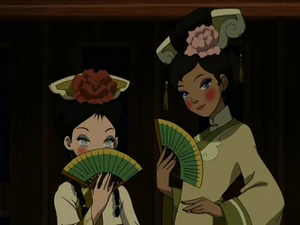
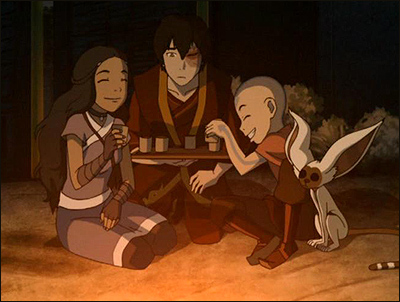
Avatar.
Avatar-The Last Airbender.


Laugh all you want. I see you all rolling your eyes. I can't help myself-I love my Avatar. I discovered this delightfully delightful television series at the beginning of the summer, when I began working at NU. Our first training sessions were "character research days" where we watched the shows of the Nick characters that the park owns.


Did I ever mention what a physically demanding and taxing job I have? Riiiiiiigggghhht.

One of my fellow trainees was flabbergasted when I mentioned that I'd never heard of Avatar before. Honestly, I've never seen someone so disturbed. So, we watched an episode of Avatar. I was seriously unimpressed. However, I fit the Aang costume, and I'd probably have to cohort Aang, so I figured I should probably be somewhat knowledgeable about the series. Thus, in the spirit of being a good, well-informed employee, I reserved the first few episodes from the library. While I watched them in the comfort of my living room, a quiet, sneaky little thought stirred within my mind- "I'm actually kind of enjoying these," it whispered. I laughed superciliously, and quickly quashed that queer qualm.

And then promptly reserved the rest of Season One.


(Or, rather, I should say "Book One." Avatar seasons are called 'books,' and the episodes are called 'chapters.' Random Avatar fact you probably didn't want to know...but now you do!)


Anyhow, over the summer, I've fallen more and more in love with Avatar. It makes me laugh, it makes me cry (no joke. I don't kid about these things! :)), and it's made me practice my earth-bending moves on my long-suffering and ever-patronizing younger brother.

The series main premise is such: it takes place in a fantasy world, where there are four nations, named after the four different elements: air, earth, water, and fire. Certain people can be trained to 'bend' the elements; bending is a martial art-not magic. Nickelodeon's adamant that it's not magic(I learned this by reading the big blue folder at work that is filled with all sorts of inside information about Nick shows-they call it the "Nick Bible.") Anyhow, the basic plot is that Aang (that strange, hyper, bald kid with the random blue arrow on his forehead) has to master all four elements, defeat the power-crazed fire lord, and save the world.

Oh, yeah.

He's twelve.

No sweat, right?

When I was twelve, all that was expected of me was that I make my bed, do my school, and not pick fights with my younger siblings.

Moral of the story is that Avatar=EPIC. (I know you hate that word, Cordelia, but it's the only one that does it justice! :)) I just finished the the series, and I was on the edge of my seat with excitement at the end. My brother rolled his eyes.

But he was watching intently.

Here's betting that he'll be ordering some Avatar episodes from the library soon.


Tuesday, October 6, 2009

Prettiness is only skin deep...

I love going to Plugged in Online. If I want to see a movie, and I want to figure out exactly why it has a PG-13 rating, I can go to Plugged in, and find out every single possible thing in the movie that could ever be declared objectionable. They'll list every swear word that's said, every glass of wine drunk, and every lie told. If I want to know if a certain music album is any good, I'll just head to Plugged in to look at the music reviews. But it's articles like this one that cement my undying love for Plugged in.

Monday, October 5, 2009

Emma On BBC One

"Friendship is constant in all other things, save in the office and affairs of love."
~Claudio, William Shakespeare's Much Ado About Nothing

Here is the official promotional trailer for BBC One's new adaptation of Jane Austen's Emma, which premiered last night in the United Kingdom.